
Google Stitch
Introduction
Modern application development increasingly demands speed, consistency, and seamless collaboration between designers and developers. One of the biggest bottlenecks in this process is translating UI designs into production-ready code. Google Stitch addresses this challenge by introducing an AI-driven approach that converts visual designs directly into functional code components.
Google Stitch is designed to bridge the gap between design and development by leveraging advanced AI models capable of understanding visual layouts and generating corresponding frontend code. Instead of manually interpreting design files, developers can now rely on automation to accelerate UI implementation while maintaining accuracy and consistency.
What is Google Stitch?
Google Stitch is an AI-powered system that converts user interface designs—such as images, sketches, or design files—into structured code. It combines computer vision with code generation models to analyze layouts, identify components, and produce frontend code in frameworks like HTML, React, or Angular.
The core objective of Stitch is to reduce manual effort and eliminate inconsistencies that arise when translating design into code. By automating this process, it enables faster development cycles and allows developers to focus more on functionality and logic rather than repetitive UI work.
How Google Stitch Works
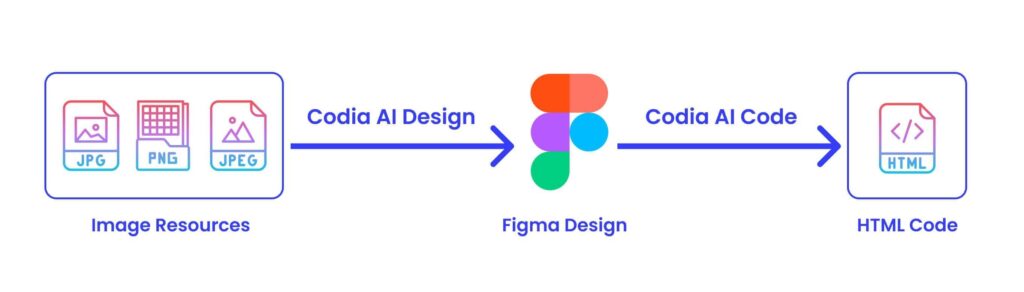
Google Stitch operates through a structured pipeline that begins with design input and ends with executable code. The system first analyzes the visual input using computer vision techniques to detect layout structures such as headers, buttons, forms, and containers. It then maps these visual elements to corresponding UI components.
Once the components are identified, a code generation model translates the structure into code. This includes defining HTML elements, applying styles, and organizing the layout according to best practices. The output is a clean and structured codebase that developers can directly integrate into their projects.
Core Capabilities
Google Stitch is capable of understanding both simple and complex UI layouts. It can identify spacing, alignment, typography, and component hierarchy, ensuring that the generated code closely matches the original design. It also supports component-based frameworks, making it suitable for modern frontend architectures.
Another important capability is consistency. Since the code is generated systematically, it reduces variations that typically occur when multiple developers interpret the same design differently. This leads to more maintainable and scalable codebases.
Working Example: Converting a UI Design into Code
To understand how Google Stitch works in practice, consider a simple example of a product card design.
Design Input
The design includes:
- A product title
- A price label
- A call-to-action button
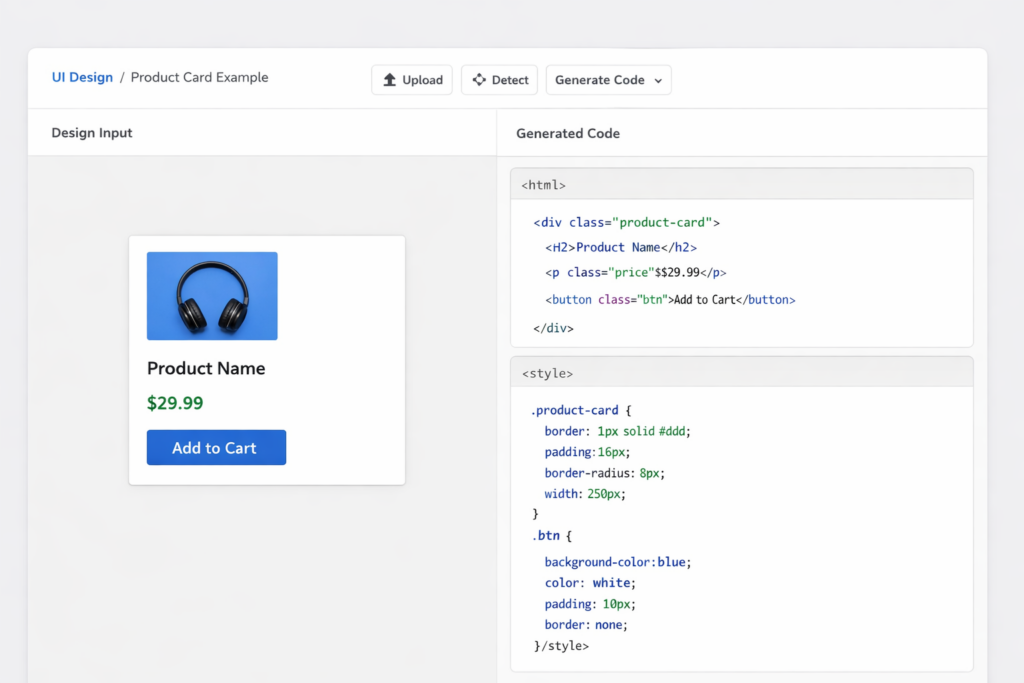
This output demonstrates how a visual design can be translated into structured code with styling and layout.
Practical Use Cases
Google Stitch can be applied across multiple development scenarios. In frontend development, it significantly reduces the time required to build UI components, especially for dashboards, admin panels, and forms. For teams working with frameworks like Angular or React, it helps in quickly generating reusable components.
In design-to-development workflows, it improves collaboration between designers and developers by ensuring that the final implementation closely matches the original design. It also minimizes the need for back-and-forth communication regarding layout details.
For rapid prototyping, Stitch enables teams to quickly convert ideas into working interfaces, making it easier to validate concepts and iterate faster.
Benefits
One of the primary benefits of Google Stitch is increased development speed. By automating the conversion process, developers can focus more on business logic and backend integration. It also improves accuracy by reducing human errors during manual coding.
Another advantage is consistency. Since the system follows a structured approach, it ensures uniform coding patterns across projects. This leads to better maintainability and scalability.
Limitations
Despite its advantages, Google Stitch is not a complete replacement for developers. Complex logic, dynamic interactions, and advanced state management still require manual implementation. The generated code may also need optimization and refinement based on project requirements.
Additionally, design quality plays a crucial role. Poorly structured or ambiguous designs can lead to less accurate code generation.
Conclusion
Google Stitch represents a significant step forward in bridging the gap between design and development. By leveraging AI to automate UI-to-code conversion, it enhances productivity, improves consistency, and accelerates development workflows.
As AI-driven tools continue to evolve, solutions like Google Stitch are likely to become integral to modern development practices. While they do not eliminate the need for developers, they redefine how developers work, enabling them to focus on higher-level problem-solving rather than repetitive tasks.