
Introduction
Software quality and security are no longer separate concerns. Modern development teams need automated testing, static analysis, dependency auditing, and security scanning to ensure that bugs and vulnerabilities never reach production.
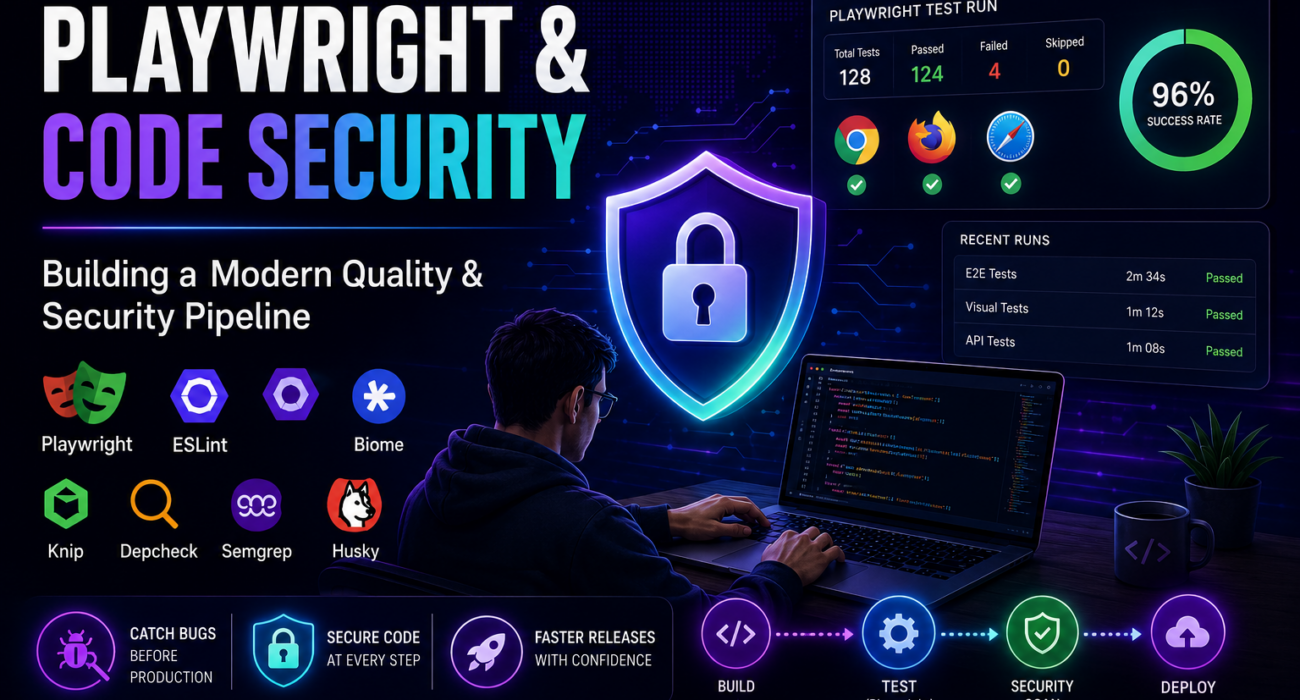
In our engineering workflow, we use a combination of Playwright, ESLint, Biome, Knip, Depcheck, Semgrep, and Husky to create a comprehensive quality and security pipeline. Each tool serves a unique purpose, and together they help us deliver reliable, secure, and maintainable applications.
What is Playwright?
Playwright is an open-source end-to-end testing framework developed by Microsoft. It enables developers to automate real browser interactions and validate application behavior exactly as users experience it.
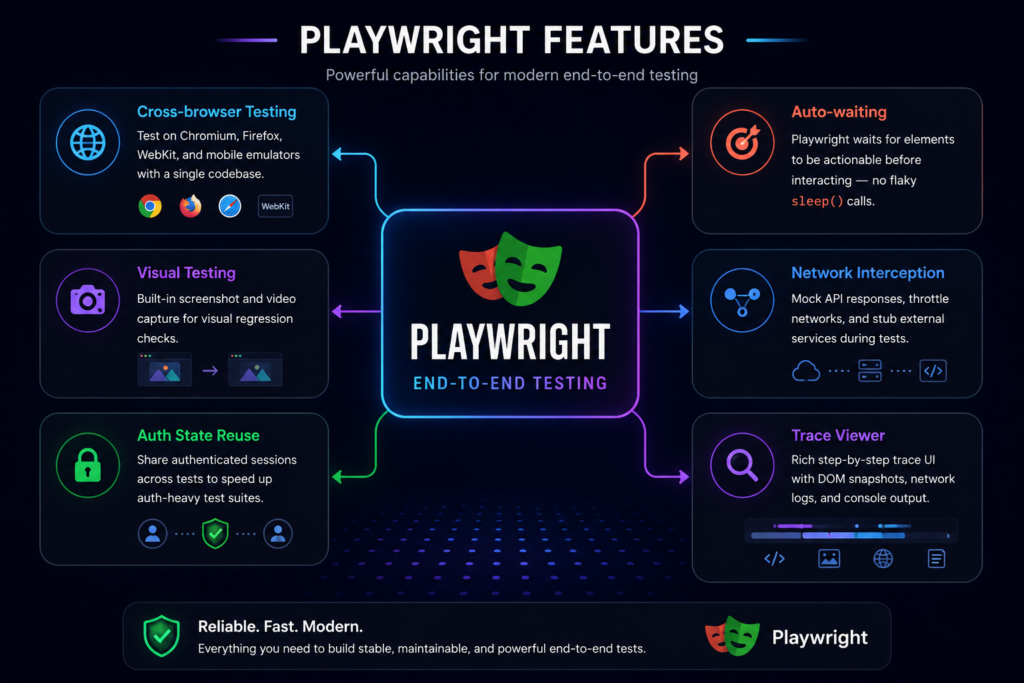
Unlike traditional testing tools, Playwright was designed for modern web applications and provides built-in support for:
- Chromium, Firefox, and WebKit browsers
- Auto-waiting for elements
- Network request interception
- Visual testing
- Parallel execution
- Cross-platform testing
With a single API, developers can create robust tests that validate complete user journeys.
Why We Chose Playwright
Before adopting Playwright, we evaluated several testing frameworks including Selenium and Cypress.
Playwright stood out because it offers:
- True cross-browser support
- Fast execution speed
- Reliable test stability
- Built-in parallel testing
- Excellent debugging tools
- Free and open-source licensing
These capabilities made it an ideal solution for ensuring application quality across multiple environments.
How Playwright Reduces Production Bugs
One of the biggest challenges in software development is preventing regressions. A regression occurs when a new feature unintentionally breaks existing functionality. Playwright helps reduce production bugs through several mechanisms.
Automated User Journey Testing
Playwright tests simulate complete user workflows such as:
Login → Dashboard → Search → Checkout → Confirmation
If any step fails, the issue is detected before deployment, helping teams catch critical issues early.
Cross-Browser Validation
Applications often behave differently across browsers. Playwright automatically validates functionality across:
- Google Chrome
- Mozilla Firefox
- Safari (WebKit)
This prevents browser-specific issues from reaching end users and ensures a consistent experience across platforms.
API Contract Testing
Playwright allows teams to mock and intercept API requests, enabling comprehensive testing of backend interactions.
Developers can validate:
- Successful API responses
- Error responses
- Request timeouts
- Network failures
This ensures applications gracefully handle unexpected scenarios and maintain a reliable user experience.
Visual Regression Testing
User interface changes can sometimes introduce unintended design issues. Playwright’s screenshot comparison and visual testing capabilities help identify visual regressions before deployment.
By automatically comparing screenshots between releases, teams can quickly detect layout shifts, styling issues, missing elements, and other UI inconsistencies.
Playwright in Action
A typical Playwright test automates browser actions such as:
- Opening pages
- Filling forms
- Clicking buttons
- Verifying content
- Validating navigation
By executing these actions automatically, teams gain confidence that critical functionality remains operational after every code change.
Beyond Testing: Strengthening Code Security
Testing alone is not enough. Applications also need protection against security vulnerabilities, dependency risks, and code quality issues. To achieve this, we use several complementary tools that work together to create a comprehensive quality and security pipeline.
ESLint – Static Code Analysis
ESLint helps identify potential coding issues before applications run.
Benefits include:
- Detecting unused variables
- Preventing dangerous coding patterns
- Enforcing coding standards
- Improving maintainability
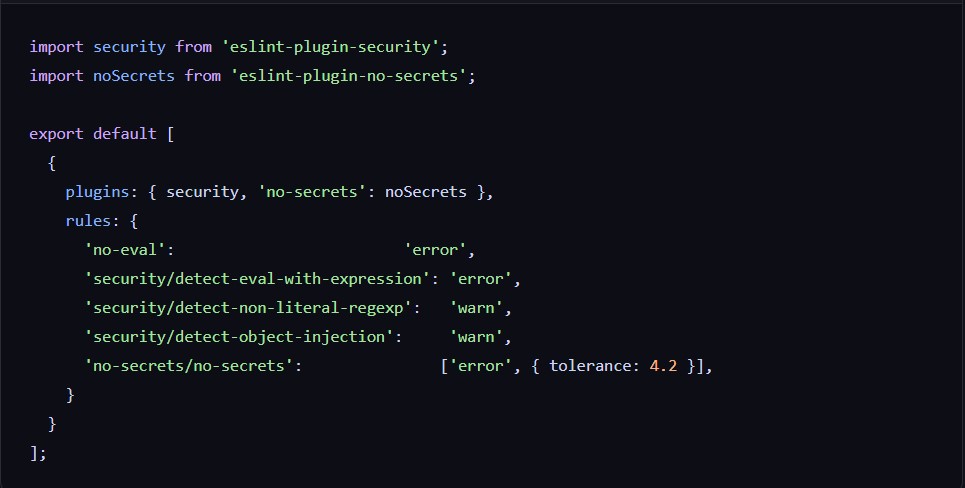
Security-focused ESLint rules can detect:
- Dangerous
eval()usage - Potential injection risks
- Hardcoded credentials
- Security anti-patterns
By integrating ESLint into the development workflow, teams can identify issues early, improve code quality, and reduce potential security vulnerabilities before deployment.
Biome – Modern Linting and Formatting
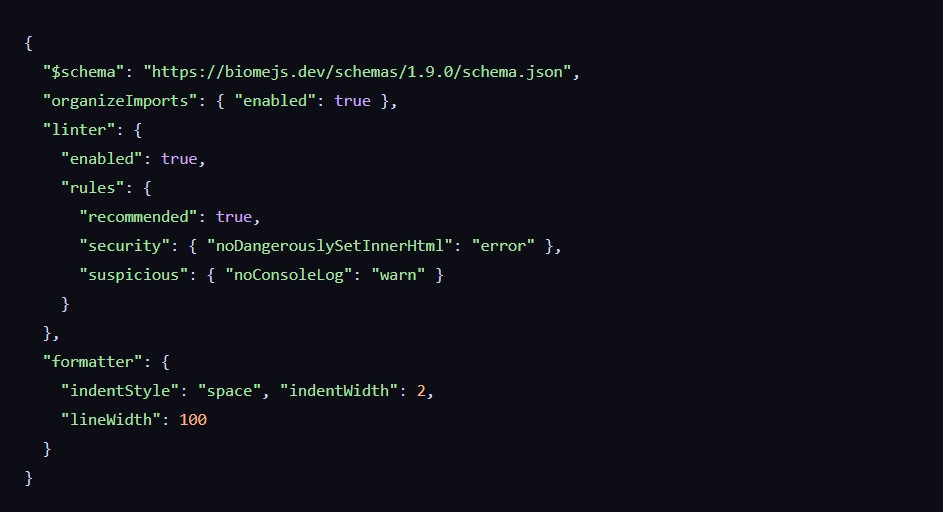
Biome is a high-performance tool built in Rust that combines linting and formatting into a single solution.
Key benefits include:
- Faster execution
- Consistent code style
- Automatic formatting
- Improved developer productivity
Biome reduces code review noise, enforces coding standards automatically, and helps maintain a clean, consistent, and maintainable codebase across development teams.
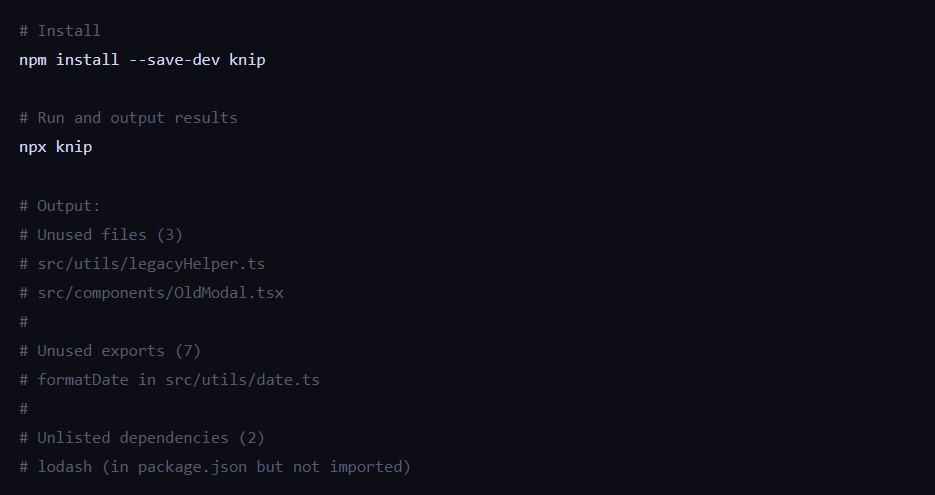
Knip – Dead Code Detection
Over time, software projects accumulate unused files, exports, and functions that increase complexity and make maintenance more difficult.
Knip helps identify:
- Unused files
- Unused exports
- Redundant code
Removing dead code provides several benefits:
- Reduced maintenance effort
- Smaller codebase
- Lower security risk
- Improved readability
By eliminating unused code, teams can simplify their applications, improve maintainability, and reduce the potential attack surface of their software.
Depcheck – Dependency Auditing
Modern applications rely heavily on third-party packages to accelerate development and add functionality.
Unused dependencies increase:
- Security risks
- Maintenance overhead
- Application size
Depcheck helps identify:
- Unused dependencies
- Missing dependencies
- Incorrect dependency classifications
This ensures the project only contains packages that are actively required, reducing complexity and minimizing potential security vulnerabilities.
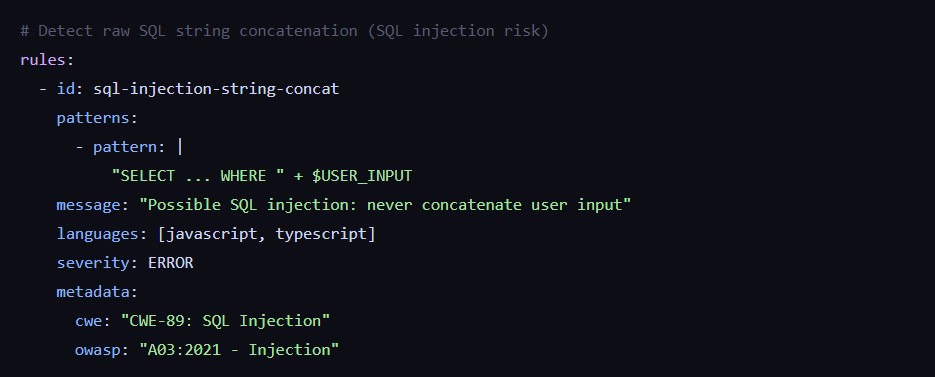
Semgrep – Security Scanning
Semgrep is a powerful Static Application Security Testing (SAST) tool that helps developers identify security vulnerabilities early in the software development lifecycle.
It helps detect:
- SQL injection vulnerabilities
- Cross-site scripting (XSS)
- Hardcoded secrets
- Authentication issues
- Authorization flaws
By integrating Semgrep into the development workflow, teams can identify and resolve security vulnerabilities before they reach production environments, strengthening overall application security.
Husky – Automated Quality Gates
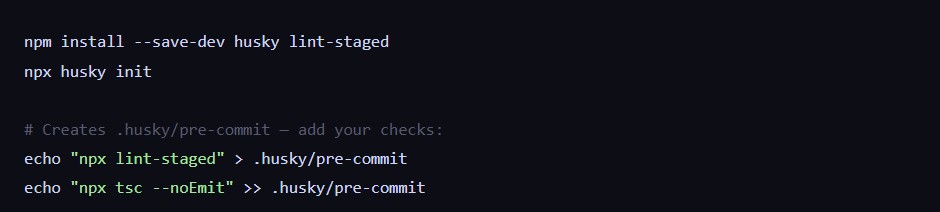
Husky is a key component of a modern Playwright Code Security pipeline, enabling teams to run automated quality and security checks before code is committed.
Typical pre-commit checks include:
- ESLint
- Biome
- Semgrep
- TypeScript validation
This prevents problematic code from entering the repository and ensures issues are identified before they reach CI/CD pipelines.
Benefits include:
- Consistent code quality
- Reduced review effort
- Faster feedback cycles
- Improved team standards
By enforcing automated checks at every commit, Husky helps development teams improve software quality, strengthen security practices, and maintain a reliable development workflow.
Building a Complete Security Pipeline
Our development workflow follows a layered approach, where each tool is responsible for identifying specific categories of issues before code reaches production.
Developer
↓
Biome
↓
ESLint
↓
Semgrep
↓
Husky
↓
Pull Request
↓
Playwright Testing
↓
CI/CD Pipeline
↓
Production
Each layer catches different categories of issues, ranging from coding standards and formatting problems to security vulnerabilities, dependency risks, and functional regressions.
Together, these tools create a strong defense against both software bugs and security vulnerabilities, enabling teams to deliver reliable, maintainable, and secure applications with confidence.
Results and Impact
After implementing this workflow, we observed significant improvements across software quality, security, and development efficiency.
Reduced Production Bugs
Automated testing with Playwright helps identify regressions before deployment, reducing the likelihood of production issues and improving application reliability.
Improved Code Quality
Linting and formatting tools such as ESLint and Biome enforce consistent coding standards, making code easier to maintain and review.
Better Security
Security-focused tools like Semgrep help identify vulnerabilities early in the development lifecycle, reducing potential risks before release.
Faster Releases
Developers spend less time fixing avoidable issues and more time building features, resulting in faster and more efficient release cycles.
Increased Confidence
Teams can deploy applications with greater confidence, knowing that quality checks, security scans, and automated tests have validated critical functionality.
Key Takeaways
Modern software development requires more than manual testing.
By combining:
- Playwright
- ESLint
- Biome
- Knip
- Depcheck
- Semgrep
- Husky
Development teams can build a robust quality and security pipeline that continuously validates application behavior, code quality, and security posture.
The result is faster development cycles, fewer production incidents, improved security, and more reliable software.
As applications continue to grow in complexity, investing in automated testing, static analysis, dependency auditing, and security tooling is no longer optional—it is essential for delivering high-quality software at scale.